
What a Skilled Electrician in Bedford Can Do for Your Home or Business
Finding a trusted electrician in Bedford is about more than fixing a tripping breaker. It’s about safeguarding people, protecting property, and future‑proofing your electrics so they work efficiently every day. From period homes along the Great Ouse to modern business parks and schools across Bedfordshire, a qualified team can design, install, test, and maintain systems that meet today’s standards and tomorrow’s demands. Whether you manage a warehouse, run a busy office, or own a family home, you need electrical solutions that balance compliance, performance, and cost control.
On the domestic side, typical projects include a consumer unit upgrade with modern RCDs, surge protection, and neatly documented circuits; partial or full rewiring where aged or mixed‑era cabling presents a risk; and targeted fault finding when nuisance tripping, heat damage, or flickering lights point to deeper problems. Upgrades often extend to LED lighting for better illumination and lower bills, smart thermostats and controls, outdoor power for gardens and workshops, and EV charger installs with load management to protect the main supply. All of it should be tested and certified to the latest BS 7671 (18th Edition) requirements and, in homes, compliant with Part P of the Building Regulations.
Commercial and industrial sites around Bedford demand a wider toolset. Offices benefit from efficient, glare‑controlled lighting, emergency escape routes with maintained fittings, and structured testing that limits downtime. Warehouses and factories often require high‑bay LED lighting, emergency lighting, 3‑phase distribution, and planned maintenance to keep production lines safe. Schools and public buildings need robust testing regimes, accessible documentation, and timely repairs. Across all sectors, services such as PAT testing, RCD testing, EICR inspections, and thermal‑imaging checks help identify hazards before they disrupt operations or compromise insurance obligations.
For many Bedford property owners, the path now includes renewables. Professionally designed solar panels and battery storage can trim energy spend and add resilience, while carefully sited EV chargers support fleets, staff, and residents. The best outcomes come from end‑to‑end support: assessing goals, designing to standards, installing with tidy workmanship, and verifying with accurate test results. When you need an Electrician in Bedford, look for a contractor who delivers that complete package—so your electrics are compliant, efficient, and easy to live with day after day.
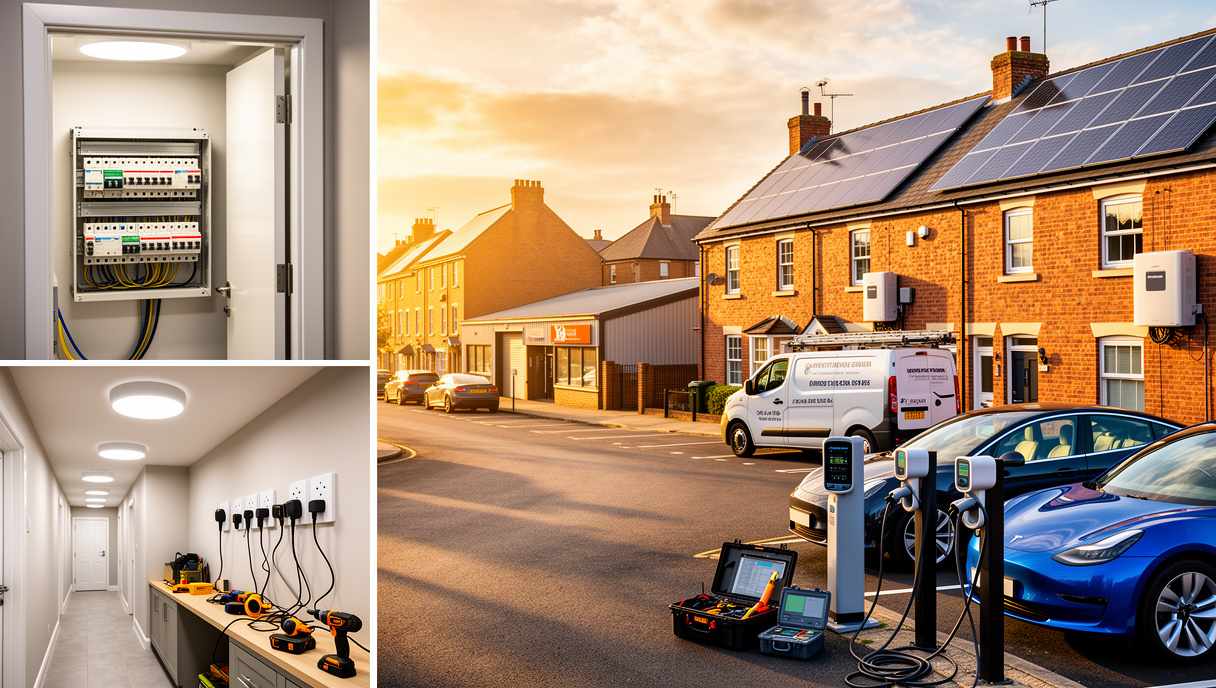
Compliance, Testing, and Safety: What Bedford Property Owners Need to Know
Reliable electrics start with compliance. In the UK, the IET Wiring Regulations (BS 7671) set the benchmark for safety. A comprehensive EICR (Electrical Installation Condition Report) evaluates the condition of your wiring, protective devices, and earthing/bonding, flagging issues as coded observations. As a rule of thumb, an EICR is recommended every 10 years for owner‑occupied homes and at least every 5 years—or at change of tenancy—for rented properties. Many commercial and industrial premises opt for intervals of 3–5 years depending on risk, with agreed‑upon percentages inspected each visit to minimise disruption. The report informs a practical plan for remedial works, from replacing damaged accessories to upgrading boards and improving fault protection.
RCD testing is another cornerstone. 30 mA RCDs protect people from electric shock, and they must trip within prescribed times during formal testing. Regular functional checks using the test button (typically quarterly) are a smart habit between inspections. Today’s consumer unit upgrades frequently include Surge Protective Devices to guard sensitive electronics and may incorporate AFDD technology on higher‑risk circuits where appropriate. Solid earthing and bonding—linking conductive parts like gas and water services—is non‑negotiable for safety and often explains persistent tripping when absent or compromised.
Portable Appliance Testing (PAT testing) supports safe day‑to‑day use of tools, IT equipment, and appliances. There is no one‑size‑fits‑all interval; it’s risk‑based and influenced by the environment and usage patterns. For example, a construction‑site drill justifies more frequent checks than a low‑use office lamp. Clearly labelled results, asset registers, and photographic evidence keep records neat for insurers and auditors. In parallel, emergency lighting requires monthly function checks and a full‑duration annual test to confirm that fittings maintain illumination long enough to evacuate safely.
Local realities matter. Bedford’s housing stock is mixed, from Victorian terraces that may hide brittle rubber cabling or ad‑hoc spurs to 1960s semis with dated consumer units and new‑build estates with evolving smart tech. In commercial corridors around Kempston and other business hubs, older distribution gear, undersized neutrals, and unbalanced phases can be common findings. A conscientious electrician in Bedford adapts testing scope and remediation to each site: installing RCBOs to isolate faults by circuit, separating shared neutrals to stop unexpected trips, or re‑terminating overheated switchgear. The result is a clear, prioritised roadmap—fix critical safety defects first, then plan upgrades to improve reliability and efficiency over time.
Lower Bills and Cut Carbon: LED, EV, Solar and Battery Projects Around Bedford
Energy efficiency is now a boardroom and kitchen‑table priority. Modern LED lighting typically cuts lighting energy by 50–70% while improving lux levels and colour rendering. For example, a Bedford warehouse replacing 400 W metal‑halide high bays with 150–200 W LED units can reduce consumption drastically, eliminate re‑lamp costs, and improve safety with instant‑on performance and emergency variants. In offices and schools, pairing LEDs with presence detection and daylight dimming keeps spaces comfortable while trimming unnecessary runtime, and well‑placed task lighting reduces eye strain and drives productivity.
Transport is shifting too. Installing workplace and residential EV chargers demands careful design: assessing supply capacity, integrating load management to avoid main fuse overloads, and positioning charge points for accessibility and cable safety. Smart chargers can schedule charging overnight to exploit time‑of‑use tariffs, shave peak demand, and collect usage data for sustainability reporting. Landlords, blocks of flats, and businesses also benefit from infrastructure‑ready planning—running trunking and feeder cables once so adding sockets later is quick, clean, and cost‑effective.
Renewables complete the picture. Professionally engineered solar panels sized to your roof, usage profile, and DNO constraints can offset daytime loads in homes, shops, and light‑industrial units. Add battery storage and you store surplus solar for the evening or charge the battery off‑peak to lower your bills even on cloudy days. With the right inverter and controls, systems can provide backup for essential circuits, keeping routers, lighting, and refrigeration running during outages. Good designs consider shading, panel orientation, microinverters versus string optimisers, and export‑limit agreements to comply with local network rules while squeezing the most value from every watt.
Real‑world examples in Bedfordshire highlight the gains. A family home near Biddenham upgraded an aging rewire and fitted a new consumer unit with RCD/RCBO protection and surge protection, then added 4–6 kWp of PV and a 5–10 kWh battery. Result: substantially lower bills, quieter evenings with stable lighting, and resilience during brief grid interruptions. A manufacturer in the Kempston area replaced fluorescent battens with IP‑rated LEDs, halving lighting energy while meeting target lux levels on the production floor; controls cut runtime in low‑traffic aisles. An office retrofitted smart meters, presence sensors, and selective EV bays, using load balancing to protect the supply and data from metering to shape behaviour. Across these projects, the common thread is a disciplined approach: survey, design to standards, install with tidy workmanship, verify with testing, and hand over clear documentation—so the installation stays safe, efficient, and easy to manage.
Whether the goal is safety compliance, lower operating costs, or a credible path to net zero, a seasoned electrician in Bedford brings practical, standards‑driven solutions. From EICR and PAT testing through to emergency lighting, EV chargers, solar panels, and battery storage, the right expertise turns plans into reliable outcomes that serve you well for years to come.

Helsinki game-theory professor house-boating on the Thames. Eero dissects esports economics, British canal wildlife, and cold-brew chemistry. He programs retro text adventures aboard a floating study lined with LED mood lights.